What Is an Access Control System? Types, Benefits & Use Cases

An Access Control System is a critical part of modern security infrastructure. As businesses, institutions, and residential spaces grow, managing who can access specific areas and when becomes essential. Traditional locks and keys are no longer sufficient to meet today’s security and compliance requirements. Access control systems provide a smarter, safer, and more efficient way to protect people, property, and sensitive information.
Access Control System benefits

What Is an Access Control System?

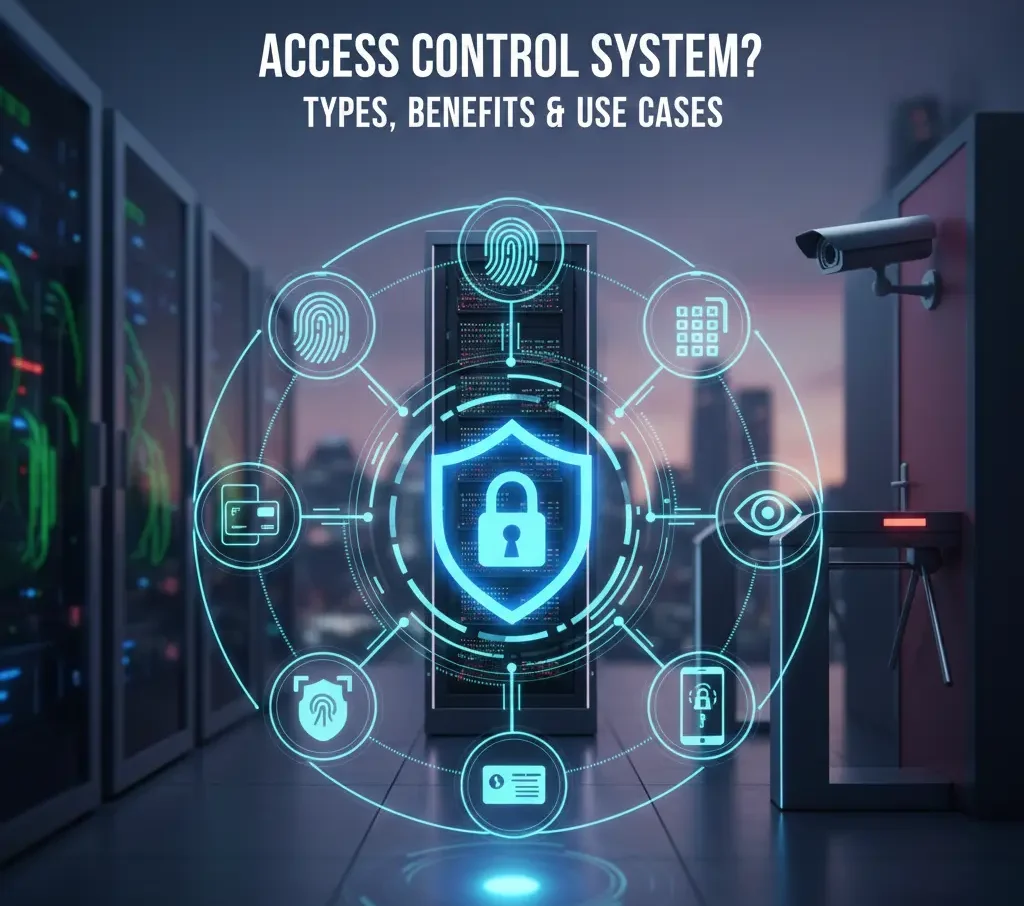
An access control system is a security solution that controls entry to buildings, rooms, or restricted areas by verifying user credentials. Instead of physical keys, these systems use access cards, biometrics, PINs, or mobile-based authentication to grant or deny access.

Every access attempt is logged, allowing administrators to monitor movement, track attendance, and improve accountability.

How Does an Access Control System Work?

A typical door access control system works through the following steps:

  • A user presents a credential (card, fingerprint, face ID, PIN, or mobile app)
  • The access reader captures the data
  • The controller verifies permissions from the database
  • Access is granted or denied instantly

This automated process ensures both high security and convenience.

Types of Access Control Systems

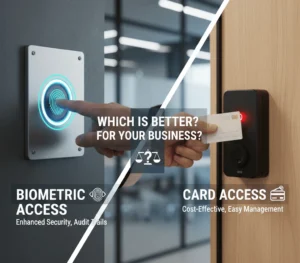
Card-Based Access Control System

Uses RFID or proximity cards for user authentication. It is easy to deploy and manage.

Best suited for: Offices, IT parks, commercial buildings

Biometric Access Control System

Uses fingerprints, facial recognition, or iris scans, offering high accuracy and security.

Best suited for: Factories, hospitals, data centers, high-security zones

PIN / Keypad Access Control

Users enter a numeric code to unlock doors. Simple but effective for low-risk areas.

Best suited for: Small offices, storage rooms

Mobile-Based Access Control

Uses smartphones via Bluetooth, NFC, or QR codes for contactless entry.

Best suited for: Smart offices, coworking spaces

Cloud-Based Access Control System

Allows centralized and remote access management across multiple locations.

Best suited for: Enterprises with multiple branches

Benefits of Access Control Systems

  • Enhanced security against unauthorized access
  • Real-time monitoring and access logs
  • Role-based access permissions
  • Easy scalability without changing locks
  • Reduced dependency on manual security
  • Integration with CCTV, fire alarm, and attendance systems

Access Control System Use Cases

Corporate Offices

Controls access to cabins, server rooms, and sensitive departments.

Industrial & Manufacturing Units

Improves safety compliance and restricts access to hazardous zones.

Hospitals & Healthcare Facilities

Secures ICUs, laboratories, pharmacies, and patient data areas.

Educational Institutions

Manages entry to classrooms, labs, hostels, and staff areas.

Residential Apartments

Enhances security by controlling visitor and staff entry.

Why Access Control Systems Are Essential Today

Access control systems provide flexibility, traceability, and long-term security. Lost credentials can be deactivated instantly, access levels can be modified in real time, and security policies can evolve as your organization grows.

This makes access control a future-ready investment for any facility.


Share:

More Posts

Top Benefits of Professional CCTV Installation Over DIY

Top Benefits of Professional CCTV Installation Over DIY

In today’s security-conscious world, CCTV surveillance has become essential for homes, offices, and industrial facilities. While DIY CCTV kits may seem cost-effective, they often fall short in critical areas like security, compliance, and long-term reliability. Choosing professional CCTV installation ensures your surveillance system actually protects what matters most. 1. Reduced

Fire Hydrant System Installation

Fire Hydrant System Installation: Design, Standards & Maintenance

A fire hydrant system is one of the most critical active fire protection systems for industrial, commercial, and large residential buildings. Unlike fire alarms that only warn occupants, a hydrant system actively supplies water to control or extinguish fire until emergency services arrive. In this guide, we cover fire hydrant system layout, pressure requirements, Indian standards, and why Annual Maintenance Contracts (AMC) are essential—especially for compliance and insurance approvals.

Top 7 Fire Safety Mistakes

Top 7 Fire Safety Mistakes Indian Buildings Still Make

Fire safety is no longer optional in India. With stricter regulations, increasing fire incidents in commercial complexes, IT parks, hospitals, malls, and residential high-rises, building owners must ensure full compliance and system readiness.

Yet, many buildings still make critical fire safety mistakes that put lives, property, and business continuity at risk.

In this blog, we highlight the Top 7 Fire Safety Mistakes Indian Buildings Still Make and how you can avoid them.

Fire alarm Vs Fire Suppression

Fire Alarm vs Fire Suppression: Which Is Right for Your Building?

When it comes to fire safety, choosing the right system is not just about compliance—it’s about protecting lives, property, and business continuity. Two of the most common fire protection solutions are Fire Alarm Systems and Fire Suppression Systems. While both are essential, they serve very different purposes.

In this guide, we break down the differences, use cases, and compliance requirements to help you decide which system is right for your building.

Send Us A Message