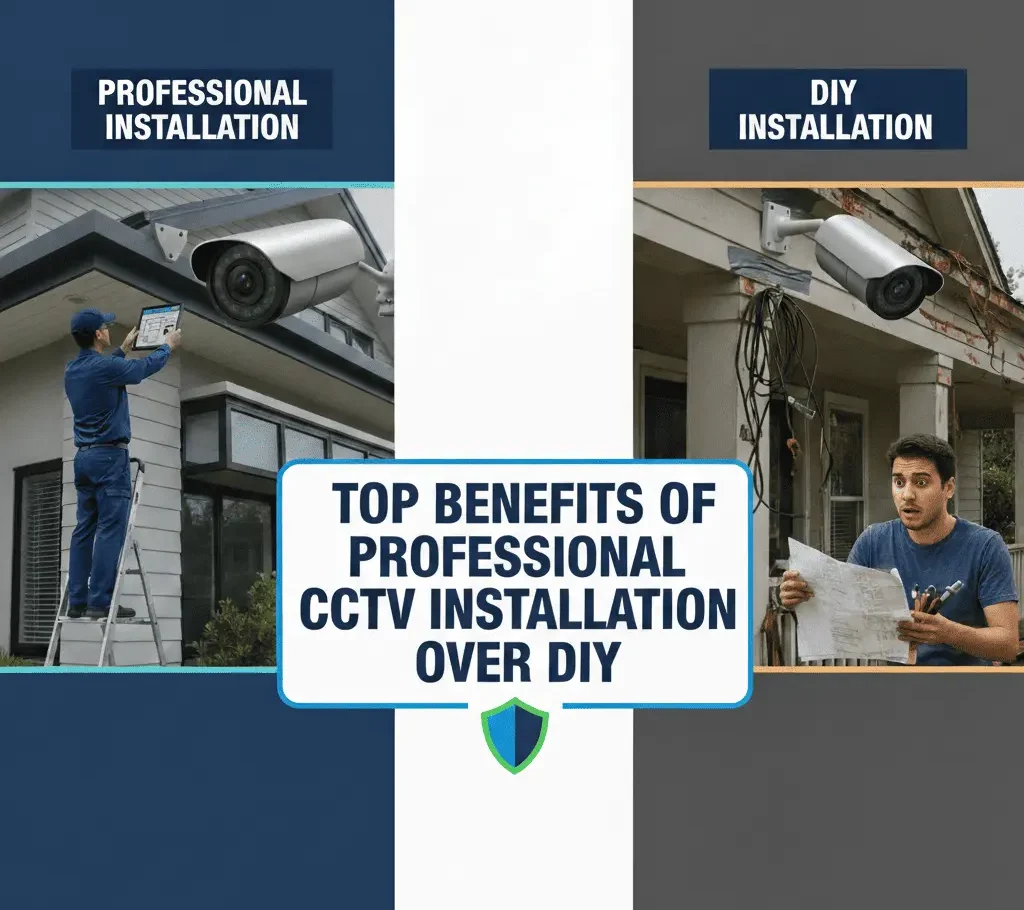
In today’s security-conscious world, CCTV surveillance has become essential for homes, offices, and industrial facilities. While DIY CCTV kits may seem cost-effective, they often fall short in critical areas like security, compliance, and long-term reliability. Choosing professional CCTV installation ensures your surveillance system actually protects what matters most.
1. Reduced Security Risks
DIY installations are prone to blind spots, incorrect camera angles, weak network security, and exposed wiring. These gaps can be easily exploited by intruders. Professional installers conduct a site survey to identify high-risk areas and ensure optimal camera placement, secure cabling, and protected network configurations—minimizing vulnerabilities from day one.
2. Compliance with Legal & Safety Standards
CCTV systems must comply with local regulations, privacy laws, and industry standards—especially for commercial, industrial, and public spaces. Professionals ensure your system meets compliance requirements, including data protection, recording policies, signage, and electrical safety norms. DIY setups often overlook these factors, leading to legal or regulatory issues later.
3. Higher System Reliability
Professional CCTV installation uses enterprise-grade equipment, proper power management, surge protection, and tested network integration. This results in stable video quality, uninterrupted recording, and reliable remote access. DIY systems may suffer from frequent downtime, storage failures, or connectivity issues due to improper setup.
4. Expert Configuration & Integration
Professionals configure advanced features such as motion detection, remote monitoring, analytics, access control integration, and alarm system connectivity. DIY installations usually rely on default settings, which limits performance and effectiveness.
5. Ongoing Support & Maintenance
With professional installation, you also get access to Annual Maintenance Contracts (AMC), system health checks, upgrades, and 24×7 technical support. DIY systems leave you responsible for troubleshooting, repairs, and replacements.
Conclusion
While DIY CCTV installation may appear cheaper initially, professional installation offers superior security, legal compliance, and long-term reliability. Investing in expert CCTV solutions ensures peace of mind, better protection, and a system that performs when you need it most.
FAQs – Professional CCTV Installation vs DIY
Is DIY CCTV installation safe?
DIY CCTV systems can work for basic needs, but they often have security gaps like poor camera placement, weak network protection, and unsecured wiring. Professional installation significantly reduces these risks.
Why is professional CCTV installation more reliable?
Professionals use tested equipment, proper power management, and correct network configurations. This ensures stable recording, clear footage, and uninterrupted system performance compared to many DIY setups.
Can DIY CCTV systems cause legal or compliance issues?
Yes. DIY installations may violate privacy laws, data protection rules, or local safety regulations. Professional installers ensure compliance with CCTV signage, data storage policies, and legal requirements.
Is professional CCTV installation worth the extra cost?
Although the upfront cost is higher, professional installation saves money long-term by avoiding system failures, security breaches, legal penalties, and frequent replacements.
Do professional installers provide maintenance and support?
Yes. Professional CCTV service providers offer Annual Maintenance Contracts (AMC), regular system health checks, upgrades, and 24×7 technical support—something DIY systems do not include.