Why Fire Safety Systems Are Mandatory in India (2026)
India’s fire safety regulations are governed by:
- National Building Code (NBC) of India
- State Fire Service Acts
- Local municipal and industrial safety rules
- Insurance compliance requirements
Whether you operate a commercial building, factory, hospital, data center, warehouse, hotel, school, or residential complex, installing certified fire protection systems is essential for:
- Life safety
- Asset protection
- Legal compliance
- Insurance eligibility
- Business continuity
What Are Fire Safety Systems?
Fire safety systems are a combination of detection, alarm, and suppression technologies designed to:
- Detect fire or smoke early
- Alert occupants and emergency responders
- Control or extinguish the fire
- Minimize damage and casualties
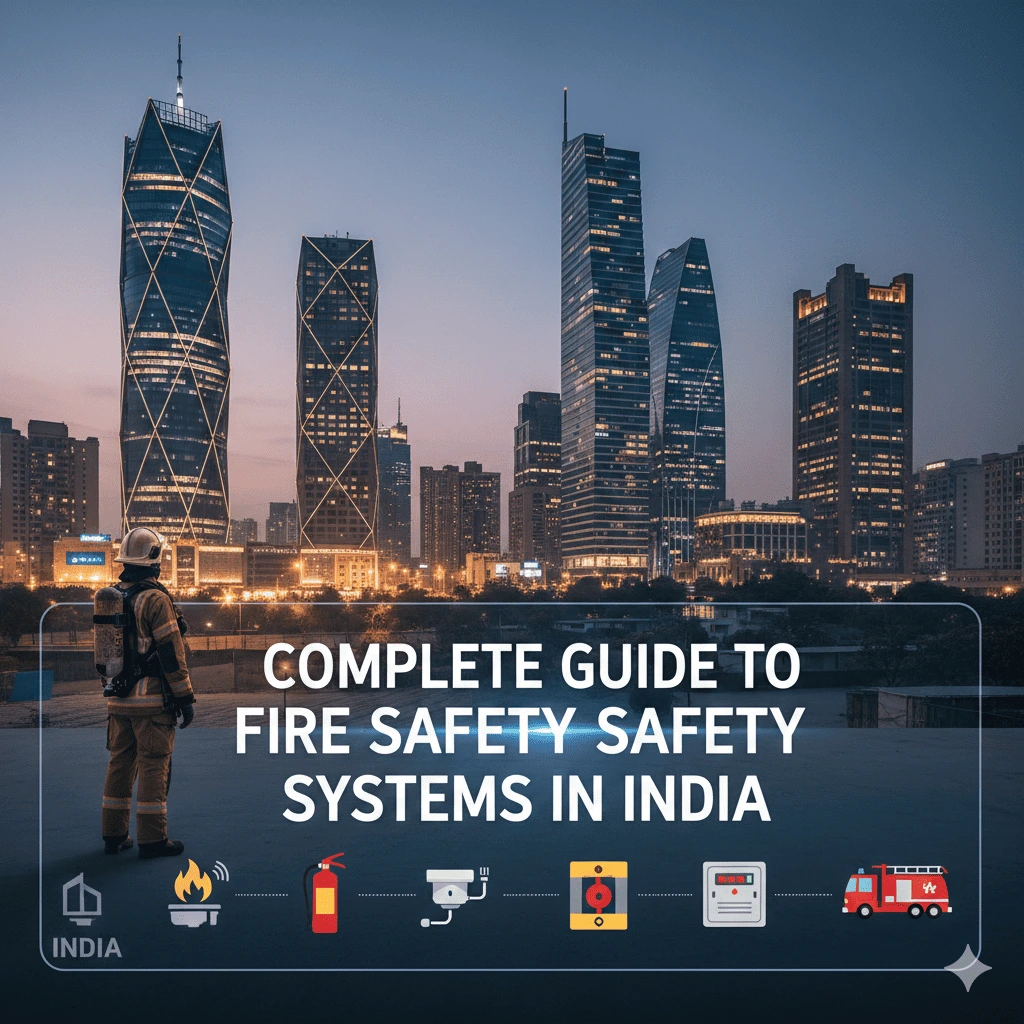
A complete fire protection setup in India typically includes:
- Fire Alarm System
- Smoke Detection System
- Fire Hydrant System
- Fire Suppression System
Let’s explore each in detail.
1. Fire Alarm System

A Fire Alarm System is the backbone of any fire safety setup. It detects fire hazards and alerts occupants through audible and visual alarms.
How It Works:
- Smoke detectors, heat detectors, and manual call points detect fire
- Signals are sent to a central fire alarm control panel
- Sirens, hooters, and flashers activate
- Fire brigade and emergency systems can be notified
Types of Fire Alarm Systems:
- Conventional Fire Alarm System – For small buildings
- Addressable Fire Alarm System – Ideal for large commercial and industrial sites
- Wireless Fire Alarm System – For heritage or retrofit projects
Where It Is Required:
- Offices and IT parks
- Factories and warehouses
- Hospitals and hotels
- Shopping malls and high-rise buildings
Tips: If you’re searching for fire alarm installation in India, always choose a certified installer who provides design, supply, installation, testing, commissioning, and AMC services.
2. Smoke Detection System
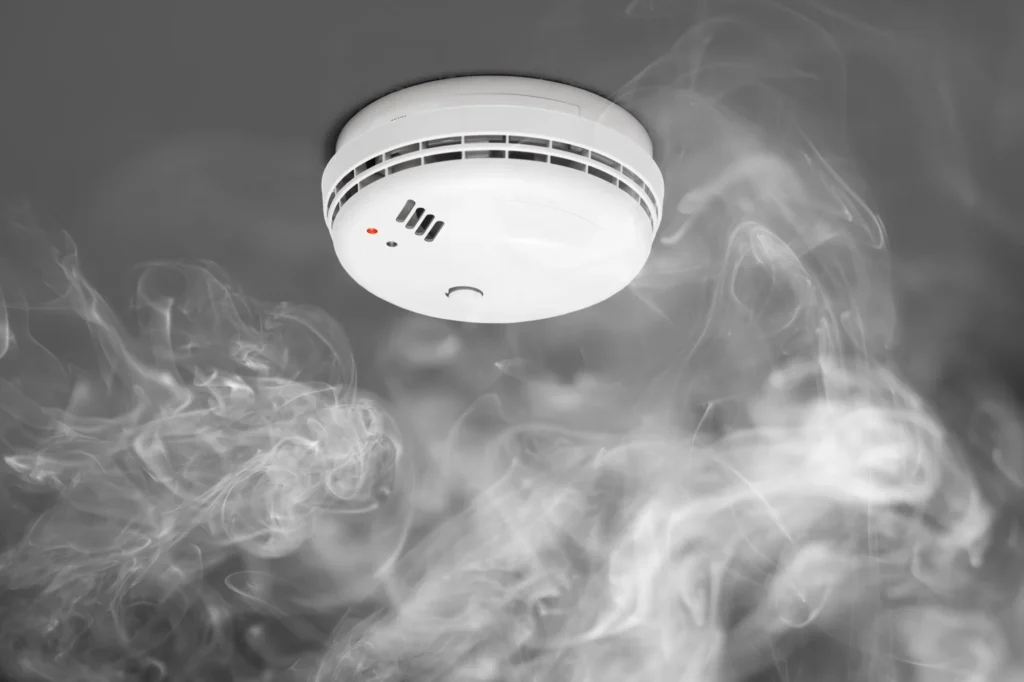
A Smoke Detection System is often integrated with fire alarms but deserves special attention for early fire detection.
Why Smoke Detection Matters:
- Smoke is the leading cause of fire-related fatalities
- Detects fire at the earliest stage before flames spread
- Essential for life safety in enclosed spaces
Types of Smoke Detectors:
- Photoelectric (Optical) Detectors – Best for slow, smouldering fires
- Ionization Detectors – Respond quickly to fast-flaming fires
- Beam Smoke Detectors – For large halls, warehouses, and atriums
- Aspirating Smoke Detection (ASD) – Used in data centers and critical facilities
Ideal Applications:
- Data centers & server rooms
- Electrical rooms
- Hospitals and laboratories
- Hotels and residential towers
3. Fire Hydrant System

A Fire Hydrant System provides high-pressure water supply for manual firefighting by trained personnel and fire departments.
Key Components:
- External and internal hydrants
- Fire pumps (main, standby, jockey)
- Underground and overhead water tanks
- Hose reels, landing valves, and piping network
Why Fire Hydrant Systems Are Essential:
- Controls large-scale fires
- Mandatory for industrial buildings and high-occupancy structures
- Supports fire brigade operations
Where Fire Hydrant Systems Are Mandatory:
- Manufacturing plants
- Warehouses & logistics parks
- Commercial complexes
- Educational institutions
- Residential high-rise buildings
Proper fire hydrant installation in India must follow NBC guidelines and be tested regularly through AMC.
4. Fire Suppression System

A Fire Suppression System automatically extinguishes or controls fires without human intervention.
Types of Fire Suppression Systems:
Water-Based Systems
- Sprinkler Systems – Widely used in commercial and residential buildings
- Deluge Systems – For high-risk industrial areas
- Water Mist Systems – For sensitive environments
Gas-Based Systems
- FM-200 / Novec 1230 – For data centers and control rooms
- CO₂ Systems – For electrical panels and engine rooms
Foam-Based Systems
- Used in oil & gas, chemical plants, and flammable liquid storage
Where Fire Suppression Is Critical:
- Data centers
- Electrical rooms
- Server rooms
- Transformer yards
- Chemical storage facilities
Fire Safety Compliance in India (2026)
To stay compliant, buildings must:
- Follow NBC Fire & Life Safety norms
- Obtain Fire NOC / Fire Clearance Certificate
- Conduct regular system inspections
- Maintain Annual Maintenance Contracts (AMC)
- Use ISI/UL/FM certified equipment
Non-compliance can result in:
- Heavy penalties
- Business shutdown
- Insurance claim rejection
- Legal liabilities
Choosing the Right Fire Safety System in India
Before investing in fire protection, consider:
- Building Type – Residential, commercial, industrial
- Fire Risk Level – Electrical, flammable materials, occupancy
- Local Regulations – State fire department norms
- Scalability – Future expansion
- Maintenance Support – AMC availability across locations
A professional fire safety provider will conduct a site survey and risk assessment before recommending the system.
Why Professional Fire Alarm Installation Matters
Why Professional Fire Alarm Installation Matters
- Accurate detection
- Zero false alarms
- Compliance with fire authority standards
- Seamless integration with hydrant and suppression systems
- Long-term reliability
DIY or unprofessional installations often fail during emergencies—making expert engineering critical.
End-to-End Fire Safety Solutions Across India
Leading fire protection companies in India now offer:
- System design & engineering
- Supply of certified equipment
- Installation & commissioning
- Fire NOC documentation support
- Annual Maintenance Contracts (AMC)
- PAN-India service coverage
This ensures your facility remains compliant, safe, and operational at all times.
Conclusion
In 2026, fire safety systems in India are not just a regulatory requirement—they are a business necessity. From fire alarm installation and smoke detection systems to fire hydrants and fire suppression solutions, every building must adopt a comprehensive fire protection strategy.
Investing in a professionally designed and maintained fire safety system protects lives, assets, and your organization’s future.
Frequently Asked Questions (FAQs)
Q1. Is fire alarm installation mandatory in India?
Yes. As per NBC and state fire safety laws, fire alarm systems are mandatory in commercial, industrial, and multi-storey residential buildings.
Q2. What is the difference between fire alarm and fire suppression?
A fire alarm detects and alerts, while a fire suppression system actively extinguishes or controls the fire.
Q3. How often should fire systems be maintained?
Fire systems should be inspected monthly and serviced at least once every year under an AMC.
Q4. Which fire system is best for data centers?
Gas-based suppression systems (FM-200, Novec 1230) combined with advanced smoke detection.