What Is a Fire Alarm System?
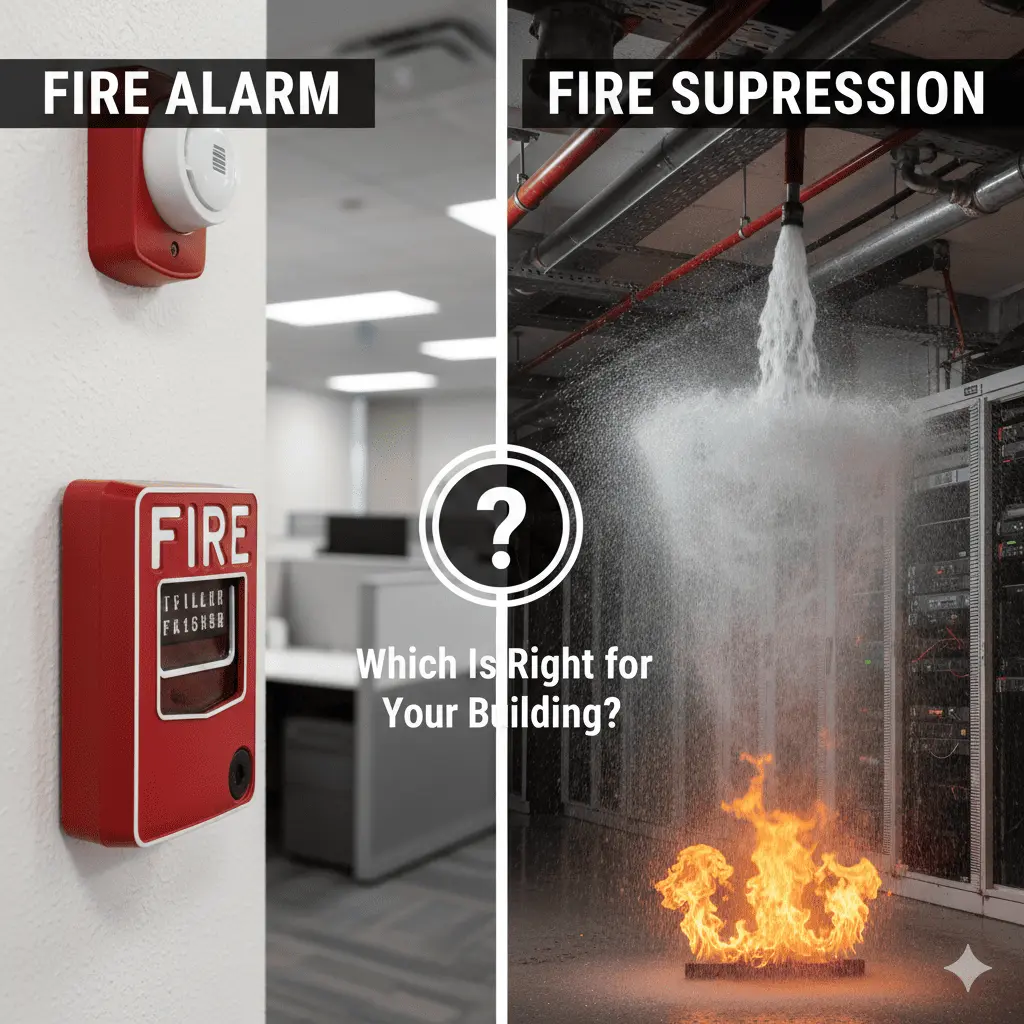
A Fire Alarm System is designed to detect fire early and alert occupants so they can evacuate safely and emergency response can begin.
How It Works
- Detects smoke, heat, or flames through sensors
- Activates sirens, hooters, and visual alarms
- Sends signals to control panels and monitoring centers
Key Benefits
- Early warning saves lives
- Ensures quick evacuation
- Helps meet statutory safety requirements
- Cost-effective for most buildings
Common Applications
- Offices and commercial complexes
- Hotels, malls, and hospitals
- Residential apartments
- Schools and institutions
What Is a Fire Suppression System?
A Fire Suppression System goes one step further. It doesn’t just alert—it automatically controls or extinguishes the fire using agents such as water, gas, foam, or chemicals.
How It Works
- Detects fire or high heat levels
- Releases suppression agent directly at the fire source
- Prevents fire from spreading and causing major damage
Key Benefits
- Minimizes property damage
- Protects sensitive equipment and assets
- Reduces downtime after incidents
- Ideal for high-risk or critical areas
Common Applications
- Data centers and server rooms
- Electrical panels and control rooms
- Manufacturing units and warehouses
- Oil & gas facilities, laboratories
Fire Alarm vs Fire Suppression: Comparison
| Feature | Fire Alarm System | Fire Suppression System |
| Primary Function | Detects and alerts | Detects and extinguishes |
| Action on Fire | Warning only | Automatic fire control |
| Protection Level | Life safety | Life + asset protection |
| Installation Cost | Lower | Higher |
| Maintenance | Basic testing & AMC | Specialized inspection & refilling |
| Best For | General buildings | High-risk or sensitive areas |
Which One Does Your Building Need?
Choose a Fire Alarm System If:
- You need early warning and evacuation
- Your building is residential or commercial
- You want a cost-effective compliance solution
Choose a Fire Suppression System If:
- Your facility has high-value equipment
- Fire damage could cause major business losses
- You operate in high-risk environments
Best Practice: Use Both
In many modern facilities, fire alarms and fire suppression systems work together.
For example:
- Fire alarms detect smoke and alert people
- Suppression systems automatically control the fire before it spreads
This layered approach offers maximum safety and compliance.
Compliance & Safety Standards in India
Fire protection systems in India must follow regulations such as:
- National Building Code (NBC of India)
- Local Fire Department approvals
- IS Standards for fire safety equipment
Commercial buildings, IT parks, hospitals, factories, and public spaces are often legally required to install both detection and suppression systems depending on risk level and occupancy.
Use Cases for Commercial & IT Clients
1. Corporate Offices
Fire alarms for evacuation + suppression for electrical rooms
2. Data Centers & Server Rooms
Gas-based suppression systems (FM200 / Novec) to protect equipment without water damage
3. Manufacturing Units
Sprinkler or foam-based suppression for machinery and storage areas
4. Hospitals & Hotels
Fire alarms for public safety + targeted suppression for high-risk zones
Final Thoughts
Both Fire Alarm Systems and Fire Suppression Systems play critical roles in building safety—but they are not interchangeable.
- Fire Alarms = Early Detection & Evacuation
- Fire Suppression = Active Fire Control & Damage Prevention
For complete protection, especially in commercial and IT environments, an integrated fire safety solution is the smartest choice.
Need Expert Advice?
At SLN Automation India Pvt. Ltd., we provide:
- Fire Alarm System installation & AMC
- Fire Suppression solutions (FM200, Novec, Sprinkler, Gas-based)
- End-to-end design, integration, and maintenance across PAN India
Toll Free: 1800-309-0480
Phone: +91 90364 15959
Email: info@slninfosys.com
Website Page: https://slninfosys.com/fire-alarm-system-installation-india/
Website Page: https://slninfosys.com/fire-hydrant-system-sprinkler-installation/
👉 Contact us today for a free site assessment and customized fire safety solution.